
Why a slow construction market is your best opportunity — and why it will not last
When is the best time to build? Most people sitting on renovation plans right now are doing so because the market feels uncertain. Rates have gone up again. Property prices in Sydney are softer. Another rate rise is forecast before the end of the year. That hesitation is understandable. It is also, paradoxically, the reason the construction conditions are as good as they have been in years.
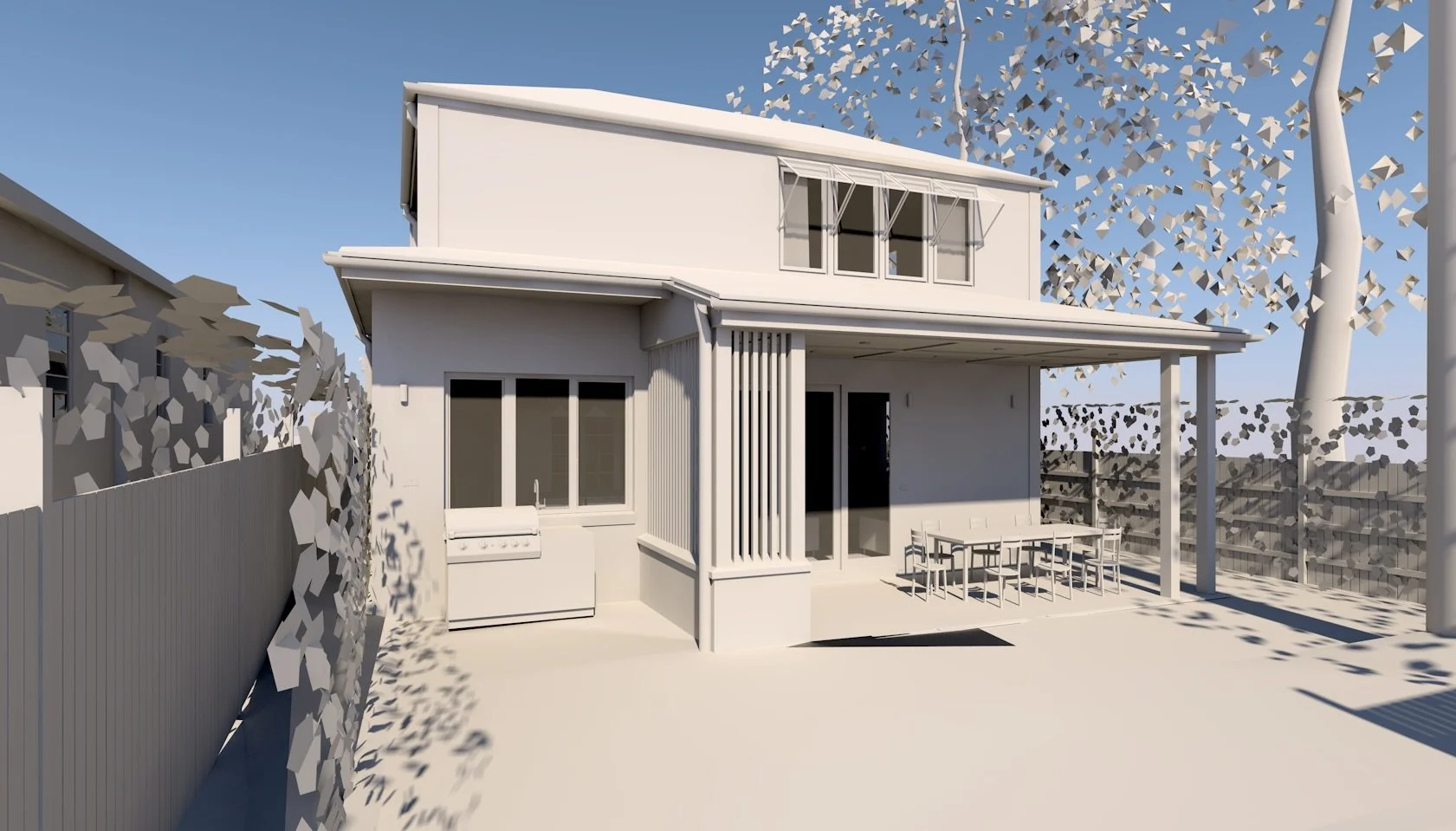
Looking ahead - design starts well before construction begins
Construction activity has slowed — and that works in your favour
Residential construction in Australia peaked during the COVID stimulus period and has been contracting since. The Housing Industry Association and Master Builders Australia have both tracked a significant pullback in new project commencements since 2022. That slowdown flows through the entire supply chain.
When builders are busy, their pricing reflects it. When demand eases, the calculus changes. Competitive tender pricing returns. Subcontractors who were booked out six months in advance are available. A client with a fully documented, council-approved project going to competitive tender right now will get meaningfully sharper prices than they would have eighteen months ago.
“Often, we have to pre-qualify a number of builders just to confirm who has the space and convenient timing to quote on, and take on our projects. Currently, I am fielding enquiries from builders with capacity right now.”
GREG PRENTICE, KARMATECTURE
What rising rates are doing to the construction market
The Reserve Bank of Australia has continued raising rates through 2025 and 2026, with another increase expected before year’s end. That has constrained household borrowing, dampened confidence, and pushed Sydney property values — particularly at the higher end — down between 6.5% to 8.6% since the beginning of the year. Tax changes affecting investment property have compounded the slowdown in residential development activity.
Most people feel this as a reason to wait. It is worth understanding what the same conditions are doing to the construction industry.
Developer pipelines have contracted. Investment-driven projects have been shelved or deferred. Subcontractors who were fully committed to apartment work and investor renovations have capacity again. Builders who were pricing to a busy market are now competing for a smaller pool of projects.
The anxiety in the broader market and the opportunity in the construction market are not separate things. They are the same thing, seen from two different positions.
The softer property market also changes the equation for anyone weighing whether to renovate or sell and upgrade. Buying and selling in the same market means price movements partly cancel each other out — but transaction costs do not cancel out at all. Stamp duty on the home you buy into, agent’s commission on the sale, and legal fees on both sides are fixed costs that have to be paid regardless of where values sit. In NSW, stamp duty alone on a higher-priced purchase can run to six figures. Add agent’s commission and the full cost of moving up becomes a significant sum that has to be recovered before you have gained anything. Improving what you have, at construction costs that are as competitive as they have been in years, often represents better value than the transaction costs of moving would suggest.
According to Canstar, the RBA cash rate is forecast to remain at elevated levels through early 2027, with tentative cuts not expected until mid-to-late 2027. For a homeowner starting the design process now, that is a useful reference point. The planning and approval phase typically runs eight to eighteen months, which means the current construction market conditions are likely to persist through the period before you go to tender. The window is wider than it might feel.
At some point beyond that, rates should stabilise, confidence return, and construction demand recover. When it does, builders who are accessible today will be committed, trades will be selective, and the pricing advantage will have closed. The homeowners who use the current period to get through design and approvals will be ready to build into a recovering market rather than competing in one.
Planning takes longer than most people expect
From first conversation to construction starting is typically eight to eighteen months for a project requiring council approval. Most people are surprised by that. What you gain from that process is certainty: by the time a builder is on site, you know exactly what is being built, what it costs, and who is responsible for it — before a dollar of construction money is committed.
Start now, and when market conditions turn — which Canstar forecasts will begin to show by mid-to-late 2027 — you can be ready to build. Wait, and you will be starting the design process in a market that has already moved.
The family home argument
For homeowners planning to renovate the home their family lives in, the financial arguments exist alongside a more personal one.
The years spent in a finished, considered home — space that responds to how you actually live, that was designed around the family as it is rather than as it will be — are not replaceable. A renovation completed perfectly but five years too late is still a good outcome, but it is a diminished one. Children grow up. Circumstances change. The family life the renovation was meant to serve moves on.
There is no right time. Work is busy. Kids are at school. Something is always happening. But some periods are measurably more advantageous than others, and the combination of construction pricing, trade availability, and expected market conditions makes a compelling case for acting sooner rather than later.
IN PRACTICE
A Paddington client of ours wanted to undertake a significant renovation of their home but was not ready to commit to the full project. They started with the rear of the property — a lane-access garage with a studio above. When the major renovation followed, the studio gave the couple somewhere to live through the construction period and the garage gave them storage for their construction materials. The groundwork was already done. Disruption by the major project was significantly reduced because of what had been built first.
Established homeowners: a different kind of opportunity
For homeowners who are further into their lives — with low or no remaining mortgage, some savings behind them, and a home they have lived in for twenty or thirty years — the current environment offers a clarity worth considering.
Higher rates, while broadly uncomfortable, have one counterintuitive benefit: for people holding cash or low-risk savings, returns have improved considerably from their 2021 lows. A homeowner with little or no mortgage and capital sitting in a term deposit is in an unusual position — earning a reasonable return at exactly the moment the construction market has eased enough to make that capital go further than it has in years.
The question is whether to spend now — when builder availability and pricing are in their favour — or later, when those conditions may no longer apply. A well-designed renovation that addresses how a long-term home actually needs to function — that creates better light, more usable space, or accommodates the practical requirements of later life — adds both liveability and measurable capital value. Research from the Australian Housing and Urban Research Institute (AHURI) consistently finds that appropriate, accessible design in family homes significantly extends their capacity to accommodate residents as mobility and other needs change over time.
Livable Housing Australia’s design guidelines identify relatively modest interventions — wider corridors, level thresholds, accessible bathrooms, step-free access — that substantially improve a home’s long-term function. These changes are far more economical to design and build as part of a broader renovation than to retrofit later, and they are worth incorporating into the brief when the opportunity is there.
For an established homeowner whose savings are currently earning reasonable returns, a key productive question is whether to spend now, while the construction market is accessible and the planning conditions favour it, or later, when none of those things may be true.
The window is open. It is worth understanding what is on the other side of it.